Project Overview
Fibre optic cables are critical to global telecommunications, connecting offshore networks with onshore landing points. Installing these assets in nearshore environments is often complex, requiring integration of marine plant, diving teams, and specialist subsea burial systems. Variable seabed conditions and environmentally sensitive areas demand both technical versatility and precision.
LD Travocean engaged TAMS to support the nearshore phase of a fibre optic cable installation. The scope involved cable pull-in through a horizontal directional drilling (HDD) conduit, nearshore lay operations, subsea burial, and protection of the cable across sandy seabeds and reef structures. With proven subsea capability, specialist diving services, and a fleet of adaptable marine assets, TAMS provided the expertise and resources required to deliver the works efficiently and safely.
Scope of Work
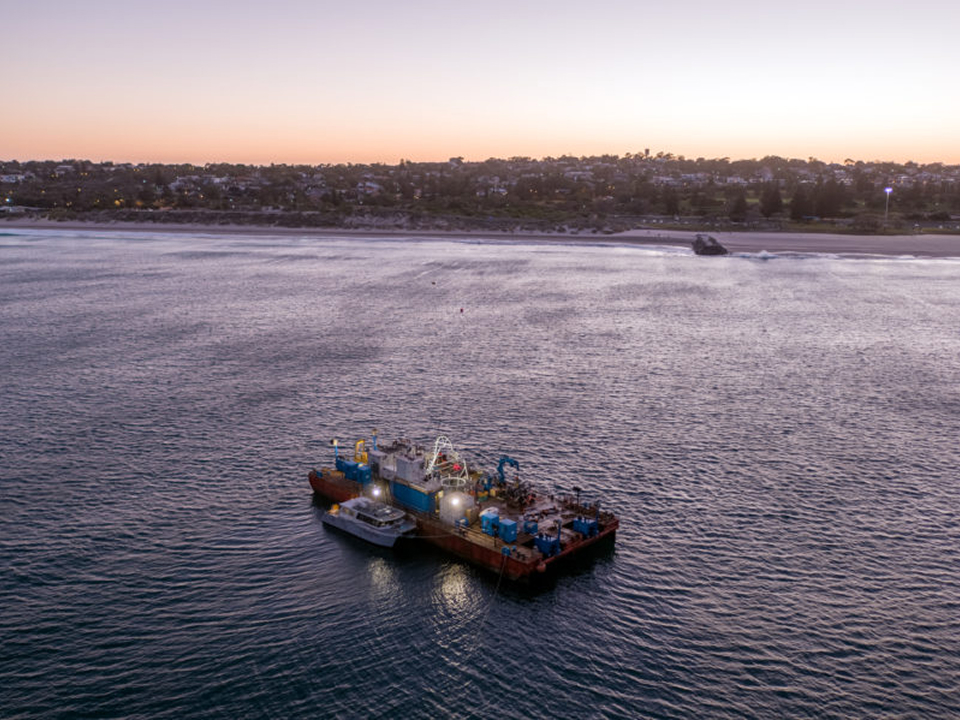
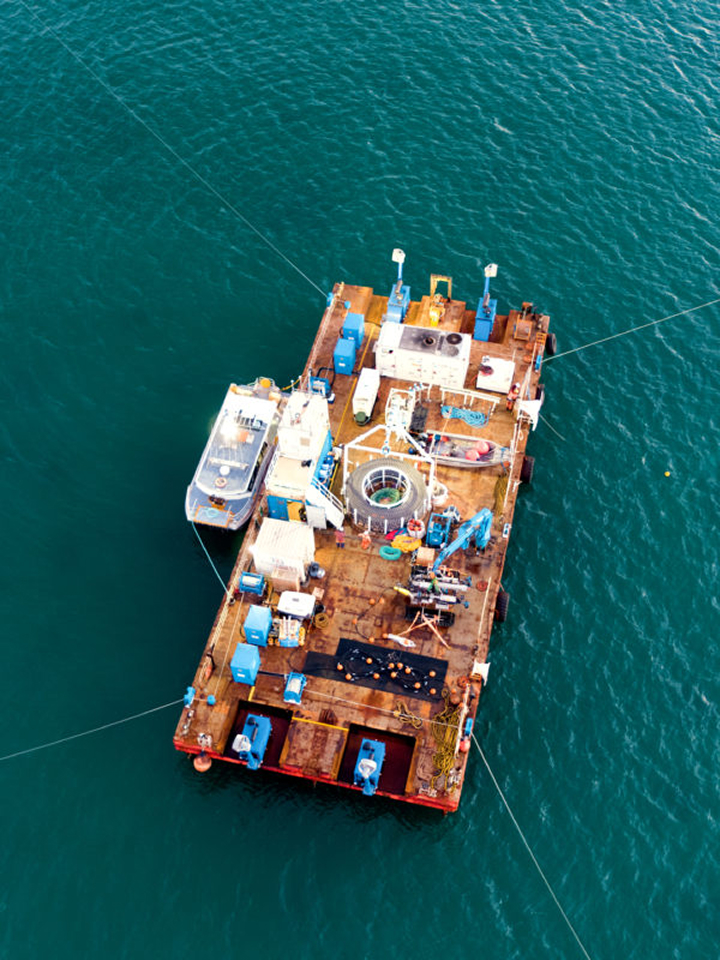
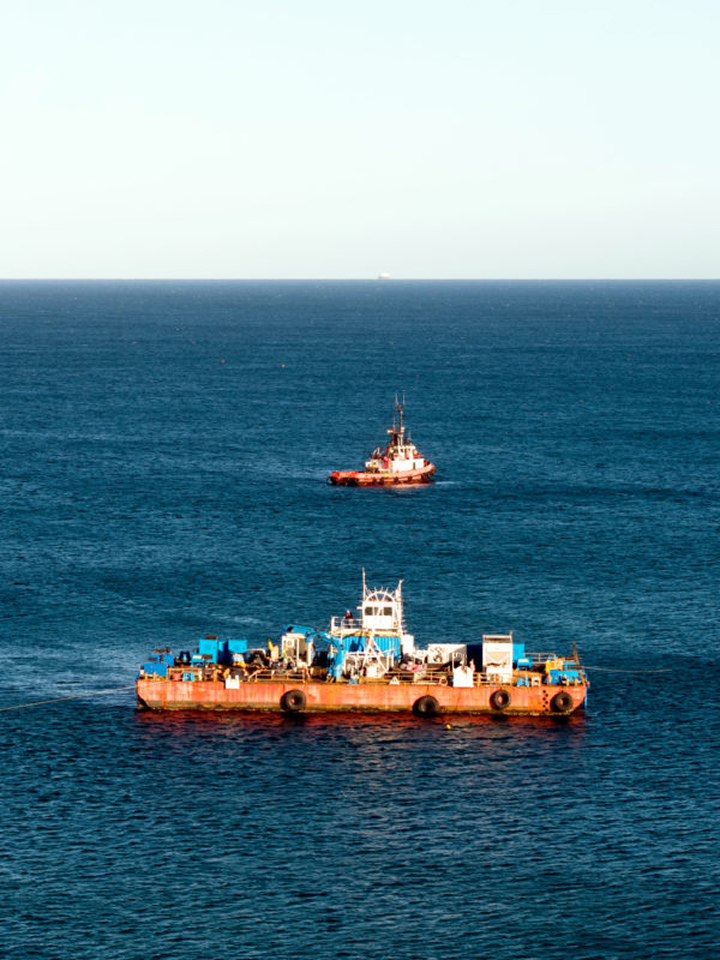
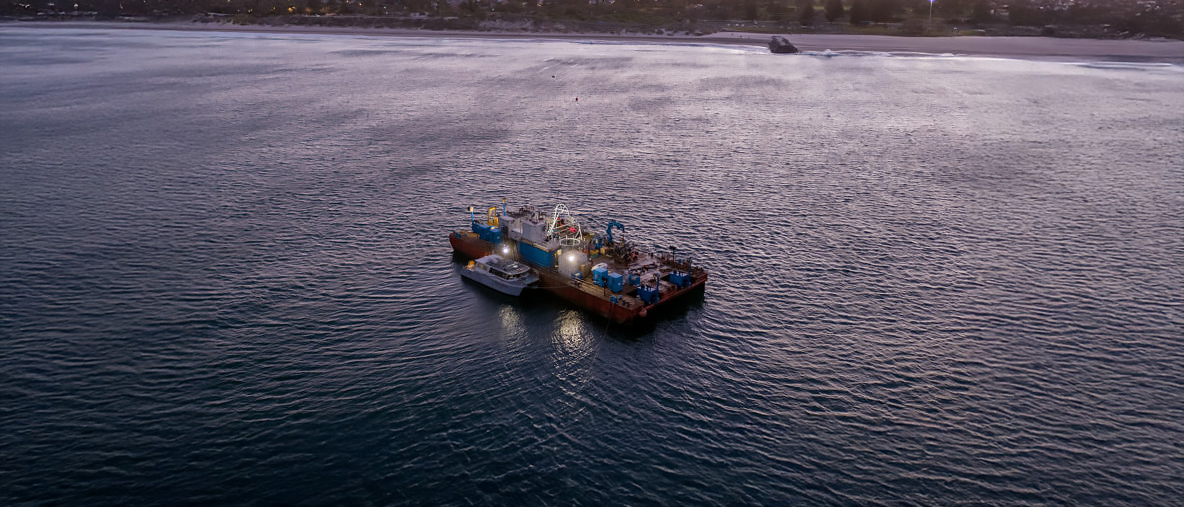
TAMS deployed its barge Robert Purnell as the main installation platform. The vessel was modified to accept a client-supplied modular 900kW dynamic positioning (DP) system, cable basket, HIAB crane, and cable lay spread. A 4-point mooring system and enriched air nitrox dive spread were integrated to support both precise positioning and sustained subsea operations.
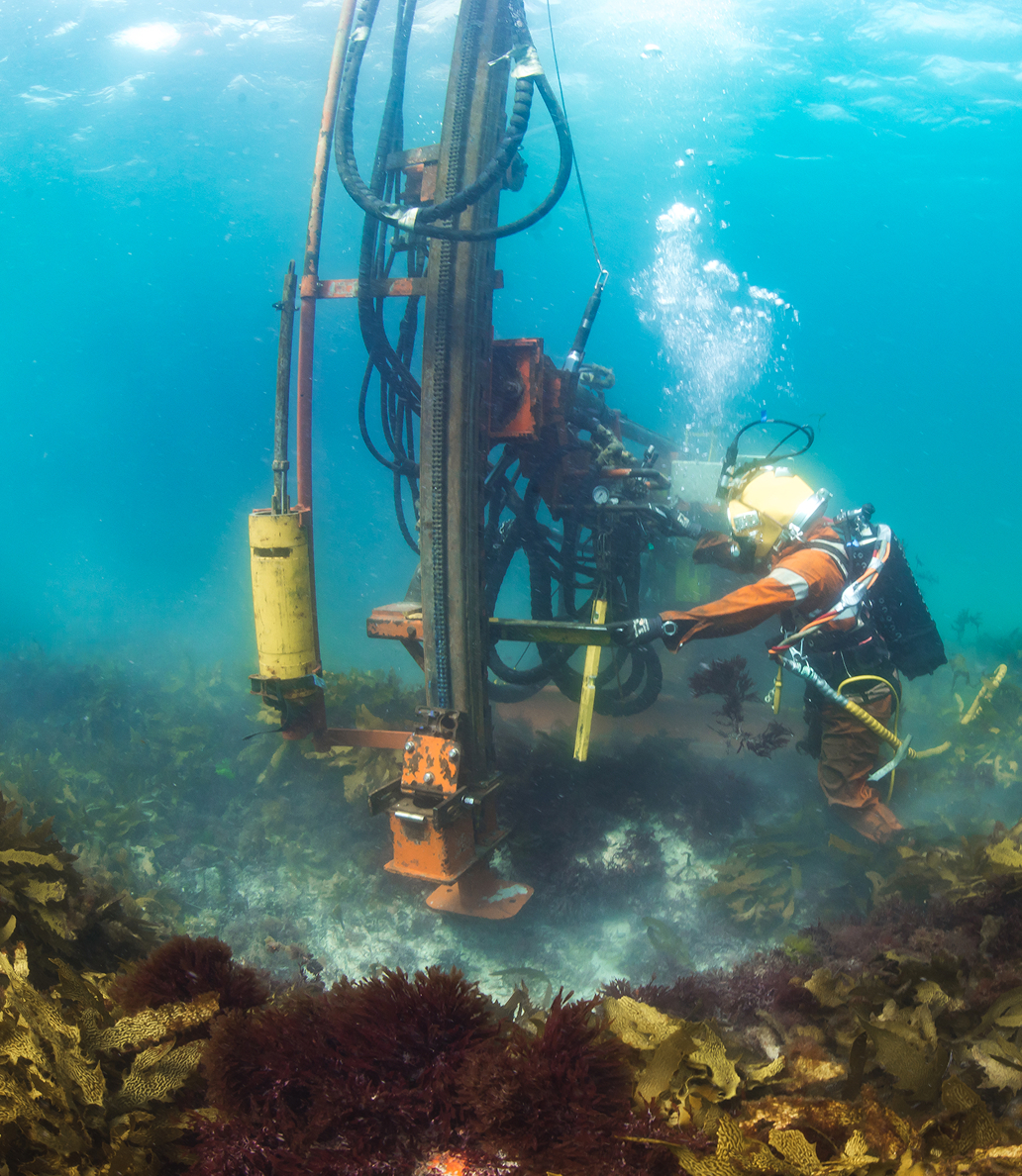
Specialist divers assisted with the HDD pull-in, drawing the fibre optic cable through an existing conduit to shore. Once secured, the barge advanced along the route, laying the cable on the seabed. Divers then supported the deployment, operation, and recovery of a subsea trenching machine, which buried the cable in sandy substrates.
In areas unsuitable for machine trenching, divers used air lifts to bury the cable manually. Where the cable transited over reef or was left free-spanning, divers installed grout bags and protective systems to secure and shield it from damage. This combination of trenching, diver-assisted burial, and protective measures ensured the cable’s integrity across variable seabed conditions.
At the seaward end, TAMS left the cable with recovery rigging in place, ready for connection to the offshore cable lay vessel, ensuring smooth integration between nearshore and offshore scopes.
Solution
TAMS delivered the project through a combination of tailored asset modification, specialist diving, and integrated subsea methods. The barge modifications created a platform capable of precision cable handling and diver support in dynamic shallow-water conditions. The nitrox dive spread enabled extended bottom times, improving productivity while maintaining diver safety.
The hybrid approach – combining mechanical trenching with diver-assisted burial and protection – proved highly effective, adapting to sandy seabeds, reef projections, and environmental sensitivities. By self-performing critical subsea works, TAMS maintained control over safety, quality, and schedule, while reducing reliance on third parties.
The project was completed ahead of schedule, with the cable fully laid, buried, and protected to specification. Through collaborative planning with LD Travocean and disciplined execution in the field, TAMS demonstrated its diver-led capability to deliver complex subsea infrastructure.